How Much Meat, Plants and Dairy Did Farmers Consume?

How Much Meat, Plants and Dairy Did Farmers Consume?

One of the things I noticed while working on family farms is that meat is not as abundant on many farms as it is in our grocery stores.

Farms provide us with a surplus of any food you want, but this is not how an isolated farm works. Along with limited meat, you cannot rely on the chickens to always produce enough eggs for everyone year-round depending on the farm.

What you do rely on is dairy including fresh raw milk, yogurt and cheese for times when you are not milking, seasonal fruits both raw and dried, seasonal vegetables (sometimes fermented in cold climates) and stored grain. My sister verified this as well after working on organic farms in New Zealand for six months.

This is simply how many small diversified farms work because butchering doesn’t happen every day and the supply is limited. Also, refrigerators and freezers are a relatively new invention for meat, which meant it traditionally had to be consumed or dried immediately.

Forks Over Knives

I often get asked about the documentary Forks Over Knives, a documentary giving evidence for a plant-based diet, and that the consumption of animal products is to blame for numerous health disorders.

According to the movie “In World War II, the Germans occupied Norway. Among the first things they did was confiscate all the livestock and farm animals to provide supplies for their own troops. So the Norwegians were forced to eat mainly plant-based foods.” During this time, mortality dropped from 30 to 24 deaths per 10,000.

While the movie will have you believe it had to do with a plant-based diet, fish intake actually went up 200%, while sugar and margarine plummeted. In the U.S., we saw a period of heart disease skyrocketing from 1920-1960. The consumption of animal fats declined, but the consumption of hydrogenated and industrially processed vegetable oils increased dramatically.

In Norway, closer inspection from the Proceedings of the Nutrition Society, 1947. Volume 5, issue 4, found that dairy consumption went up during this time, not down. While meat intake did go down during this time, the average Norwegian man was eating 3/4 of a pound of fish per day.

A paper titled Food rationing during World War two: a special case of sustainable consumption? found that Norwegians relied on herring, potatoes, wild greens, wild berries, and wild mushrooms – other words – close to a coastal hunter-gatherer diet that explained their improved health, not a plant-based diet.

Depending on what literature you have read, you will find that meat and dairy are either the cause of disease and a plant-based diet should be practiced, or that meat and dairy prevents disease and grains are the cause.

What we do know is that when we switched to the Neolithic era of agriculture, diseases became rampant, and not just from sanitation practices. Over time, these practices were perfected and many ingenious creations occurred through fermentation like sourdough bread, yogurt, kefir, beer, kombucha, kvass, sauerkraut, and kimchi.

Meat, Plant and Dairy Consumption of Traditional Agricultural Societies

Meat consumption amoung agricultural societies CROP

The default diet I experienced on farms was also one of the patterns with many of the agricultural societies in Nutrition and Physical Degeneration and The Blue Zones: Nine Lessons For Living Longer From the People Who’ve Lived the Longest. The exception being those who lived by the sea.

The following examples for agricultural societies are from observational literature, and unfortunately, in my opinion, do not always tell the whole story. If I could fly to all of these places and spend a year recording all of the meals, habits, and health I would. This could obviously be an exhaustive list, but I wanted to highlight five from past and present research.

Hunza Health Secrets for Long Life and Happiness

Hunzakuts eat mainly grain (including wheat, barley, buckwheat and small grains like millet); leafy green salads with apricot kernel oil and grape vinegar and other raw vegetables, potatoes and other root vegetables, peas and beans, chickpeas and other pulses, fresh raw milk, buttermilk, cheese and yogurt (mainly from goat or yak), clarified butter and cheese, fruit, chiefly apricots and mulberries, fresh and sun-dried, meat on rare occasions, and wine made from grapes.

In regards to meat “livestock is not abundant because animals such as cows, sheep, and goats must be fed, and the food is scarce as pastor land is limited. Therefore, meat is scarce, too, and is served only at some special occasions, usually during holidays and weddings.” During early spring when supplies were low, there would be famine, with long periods of fasting.

Another Look at the Hunza Diet: Not Shangri La

According to John Clark, author of Hunza, Lost Kingdom of the Himalayas who lived with the Hunzas for 20 months: “I wish to express my regrets to those travelers whose impressions have been contradicted by my experience. On my first trip through Hunza, I acquired almost all the misconceptions they did: The Healthy Hunzas, the Democratic Court, The Land Where There Are No Poor, and the rest—and only long-continued living in Hunza revealed the actual situations. I take no pleasure in either debunking or confirming a statement, but it has been necessary clearly to state the truth as I experienced it.”

According to the author:

Late in May, the flocks move up to summer pasture land at 12,000 to 15,000 feet, with a few men and boys from each community to herd. The herders gather the flocks into stone-walled corrals every night, where they milk both sheep and goats, and churn butter. They consume all the buttermilk, cottage cheese, and fresh milk they want, which is excellent for them but does not improve the vitamin- and mineral-deficient diet of the majority of villagers. Each family owns so few animals that they can butcher but one or two a year, which they do at Tumushuling time in December. As one sheep lasts a family about a week, this means that the average Hunza gets meat for one or two weeks per year. Since visitors always come in the summertime, this also explains the ridiculous tale that Hunzas are vegetarians by preference. One of the stories is true—they certainly eat the whole sheep! Brains, lungs, heart, tripe, everything but hide, windpipe, and genitalia! They clean a bone to a polish that would put a western dog to shame, and in conclusion, they always crack the bones and suck the marrow. As their diet is deficient in oils and vitamin D, all Hunzas have soft teeth, and fully half of them have the barrel chests and rheumatic knees of sub-clinical rickets.

So if the dairy is excellent for them but does not improve the vitamin and mineral deficient diet of the majority of the villagers, wouldn’t it stand that more meat and less grains would improve their health? 

Much like the Neolithic farmers who had plenty of sun and were still vitamin D deficient, we see the Hunzas with the same affliction. The observation has been made that skin color became lighter as humans moved out of Africa and into northern latitudes to optimize vitamin D production. But there is a problem with this climate theory; why did the Inuits maintain their darker tone?

The reason is theorized to be because northern Europeans switched vitamin D rich organ meats and fish for low-fat vitamin D deficient grain, while the Inuit maintained a vitamin D rich fish-based diet without grains.

Nutrition and Physical Degeneration

For nearly 10 years, Weston Price and his wife traveled to hundreds of cities and 14 countries in search of the secret to healthy, isolated populations and recorded it in Nutrition and Physical Degeneration. He observed perfect dental arches, minimal tooth decay, high immunity to tuberculosis and overall excellent health in those groups of people who ate their indigenous foods.

Dr. Price found when these people were introduced to white flour, white sugar, refined vegetable oils and canned goods, signs of degeneration quickly became quite evident. Dental caries, deformed jaw structures, crooked teeth, arthritis and a low immunity to tuberculosis became rampant amongst them.

How many people go to the dentist for cavities, braces and root canals, and assume that’s normal? Our teeth should be straight and cavity free, and that’s from our diet. Nutrition and Physical Degeneration is a fascinating read and is the inspiration for the non-profit Weston A. Price Foundation.

The non-profit has been extremely influential in spreading the word about grass-fed beef, pastured eggs, raw milk, fermenting vegetables, bone broth and making Kombucha.

While I agree with the majority of their research, the meat dominant stance doesn’t exactly line up with Weston Price’s research. For example, in his letter to his nieces and nephews, he states “the basic foods should be entire grains such as whole wheat, rye or oats, whole wheat and rye bread, wheat and oat cereals, oat-cakes, dairy products including milk and cheese, which should be used liberally, and marine foods.”

As you can see, there is no mention of meat and is very grain heavy. Perhaps they saw the value in his research, but the error in part of his analysis. Let’s look at a few of the cultures studied.

The Isolated Swiss

The nutrition of the people of the Loetschental Valley, particularly of the growing boys and girls, consists largely of a slice of whole rye bread and a piece of summer-made cheese (as large as the slice of bread) where are eaten with fresh milk of goats or cows. Meat is eaten about once a week.

The people of Visperterminen own land on the lower part of the mountain and maintain the vineyards that supply wine for the country. The vineyards afforded them the additional nutrition of wine and of fruit minerals and vitamins which the two groups studied at Loetschental did not have. Here the nutrition also consisted of rye, almost exclusively as the cereal; of dairy products; of meat about once a week; and also some potatoes. Limited green foods were eaten during the summer.

The general custom is to have a sheep dressed and distributed to a group of families, thus providing each family with a ration of meat for one day a week, usually Sunday. The bones and scraps were utilized for making soups to be served during the week.

The children have goat’s milk in the summer when the cows are away in the higher pastures near the snow line. I have been unable to locate any other research on the traditional people of the Loetschental Valley which has now become a resort for tourists. It is one of the few I have seen that appears to be the outlier of what appears to be a dairy and grain dominated diet without the negative health effects.

The only conclusion I can reach is that the raw dairy and bone broth (which would also extend protein) is extraordinarily high in vitamins and minerals and prevents deficiency, and there is no wheat in their diet. Which cheese is considered to have one of the highest contents of vitamin D? Swiss.

The Isolated Gaelics

The basic foods of the islanders are fish and oat products with a little barley. Oat grain is the one cereal which develops fairly readily, and it provides porridge and oatcakes which many homes are eaten in some form regularly with each meal.

The fishing about the Outer Hebrides is especially favorable, including lobsters, crabs, oysters, and clams. An important and highly relished part of the diet has been baked cod’s head stuffed with chopped cod’s liver and oatmeal. Fish eggs and organs were also highly cherished.

The women were found fishing and working from six in the morning to ten at night. There is no meat mentioned, however, I’m not convinced this was always the case and believe there must have been livestock at times.I will note that like the Swiss, there is no wheat in their diet and oats may be guilty today by grain association.

The Blue Zones: 9 Lessons for Living Longer From the People Who’ve Lived the Longest

The Blue Zones shows the lifestyle and dietary habits of the world’s longest-lived people in Sardinia, Italy; Loma Linda, California; Nicoya, Costa Rica; Okinawa, Japan and Ikaria, Greece. It’s a very enjoyable read for anyone and does a really impressive job of showing the well-rounded patterns of purpose, community and relationships with health.

Sardinia

The classic Sardinian diet consists of whole-grain bread, goat’s milk, red wine, beans, garden vegetables, fruits, and, in some parts of the island, mastic oil. They traditionally eat pecorino cheese made from grass-fed sheep, and meat is largely reserved for Sundays and special occasions.

There is interesting information on the medicinal qualities of their goat’s milk due to certain plants the goats consume in Sardinia. Personal farms and gardens are a mainstay of many Sardinians, with many older men still walking the steep hills with their sheep for 6 miles.

Sardinia has a history of 1,000 centenarians, the longest-lived in Italy and possibly the world. For some reason, there is no mention of how much fish they eat, which being in the Mediterranean seems like a major oversight but appears to be due to their location in the mountains.

What the author didn’t mention in the synopsis was that pork, lamb, and goat are the main meat, and they like lard, lot’s of it. It does seem to be confirmed that they eat meat once to twice a week by multiple sources.

According to Sarah Wilson who visited Sardinia with National Geographic, “the longevity phenomena seems to have come to an abrupt halt, even reversed. It’s almost like as soon as money came to the island (which it did about 50 years ago) the locals went from famine to feast, taking on the health consequences that come with abundance. Young Sardinians are incredibly overweight. And Sardinia has one of the highest incidences of celiac disease, I’m guessing from eating so much bread and pasta where the gluten content has shifted due to the more processed wheat strains available today.”

Okinawa

I have included Okinawa because they are constantly highlighted for some of the best health as a population on the planet, and it doesn’t appear that their diet has changed for thousands of years. Although, I’ve seen conflicting evidence of just how much meat and fish Okinawans eat.

The Blue Zones claim older Okinawans have eaten a plant-based diet most of their lives, consisting of stir-fry vegetables, sweet potatoes, goya, mugwort, turmeric, ginger and pork for infrequent ceremonial occasions and taken only in small amounts.

First, there is no mention of grain which is false. Second, I haven’t read any evidence showing that pork is only consumed for ceremonial occasions.

An article from the Weston Price Foundation claims that “the main meat of the diet is pork, and not the lean cuts only. Okinawan cuisine, according to gerontologist Kazuhiko Taira, “is very healthy and very, very greasy,” in a 1996 article that appeared in Health Magazine. And the whole pig is eaten-everything from “tails to nails. While it’s certainly true that Okinawans regularly eat some soy, the evidence indicates they also enjoy a lot of fish and pork in their diet. The monounsaturated fat those centenarians ate over the course of their long lives was not canola oil but good old-fashioned lard. Yes, lard is primarily monounsaturated fat.”

The Okinawa Factor claims “Okinawan elders eat an average of seven servings of vegetables and fruit, seven servings of grain and two servings of soy products. They consume omega-3-rich fish several times a week and minimal dairy products and meat (amounting to 1 ounce of pork or poultry a day). Who is telling the truth? That’s what I’d like to know.

SUMMARY

From the Paleolithic period, through the agricultural age and into the modern age, there is something we can learn from every time period. What is relevant today for many of us living in urban environments is how we can protect ourselves from a chemical world that hasn’t ever existed in the history of the Earth.

Our challenge now it to reduce chemical exposure by choosing organic and grass-fed methods, using safe cleaners and personal care products in our house, keeping mold out, and filtering our water systems. With these healthy practices, we can achieve optimal health in challenging times with varying percentages of plant and animal foods.
How Much Meat and Plants Did Hunter Gatherers Eat?

How Much Meat and Plants Did Hunter Gatherers Eat?

Have you ever wondered how much meat and plants our hunter-gatherers consumed? Or our farming ancestors?

I started researching the diets of many hunters and farmers and wasn’t expecting to find so many contradicting books and studies as to how much meat was consumed. It is unfortunate that personal biases and agendas cloud observational studies, which makes me skeptical of many things I don’t observe myself.

The Health of the Farmers vs. The Hunter-Gatherers

According to the book Neolithic by Susan Foster McCarter, “Like most people, you may have always assumed that hunter-gatherers were usually hungry, tired and sick; and that things were much better once people began producing their food and living in permanent villages.

In fact, the opposite is true: hunter-gatherers were extremely healthy and Neolithic farmers were not. Paleopathologists tell us that foragers had excellent teeth, they were rarely malnourished, they were taller than most people today, and they didn’t suffer from endemic or epidemic diseases.” We know this because the evidence is in the skeletal remains. The skeletons of early Neolithic farmers show scurvy (vitamin C deficiencies), rickets (vitamin D deficiencies), poor dental health, bone infections and a stature roughly 6 inches shorter than the hunter-gatherers.

So despite an abundance of food, people were often hungry and malnourished. Why? Because the diet shifted to a grain-based diet of porridge and unleavened bread.

Let’s take a look at the meat-eating habits of our hunter-gatherers, and move our way through history to the agricultural changes of introducing grains, lower meat consumption and the effects on our health.

How Much Meat and Plants Did Hunter-Gatherers Eat?

When we look at our genealogy – with the genus homo existing for 2 million years and the modern human debated to be 160,000 to 340,000 to 400,000 years ago – as hunter-gatherers and agriculture starting roughly 10,000 years ago – the human diet is heavily favored for the hunter-gatherer way of eating. 

We no longer hunt and gather, we shop. If you have any friends that hunt – or if you hunt – you know that hunting is not always successful. During my time in Colorado, many of our neighbors would hunt the entire winter without getting an elk.

During the Paleolithic period, we can assume that there were unsuccessful hunts that probably consisted of fasting for many hours or days, and gathering nuts, seeds, berries, mushrooms, greens and insects would have filled the gaps.

A research paper published in the Proceedings of the National Academy of Sciences identified 300 species of edible plants, including seeds, fruits, nuts, leaves, stems, roots and tubers (with the use of fire), mainly form the migration route out of Africa from 780,000 years ago.

Of course, if they were by the ocean, marine foods would be in abundance and a more reliable supply of animal protein. But there were also days of massive feasts of meat, especially with the coveted woolly mammoth.

In fact, it has been said that the bow was such a technological leap forward that it could have led to an increase in meat consumption and population growth rates, eventually reducing game populations in certain areas and hastening the adoption of agriculture.

Meat and Plant Consumption of Hunter Gatherers CROP

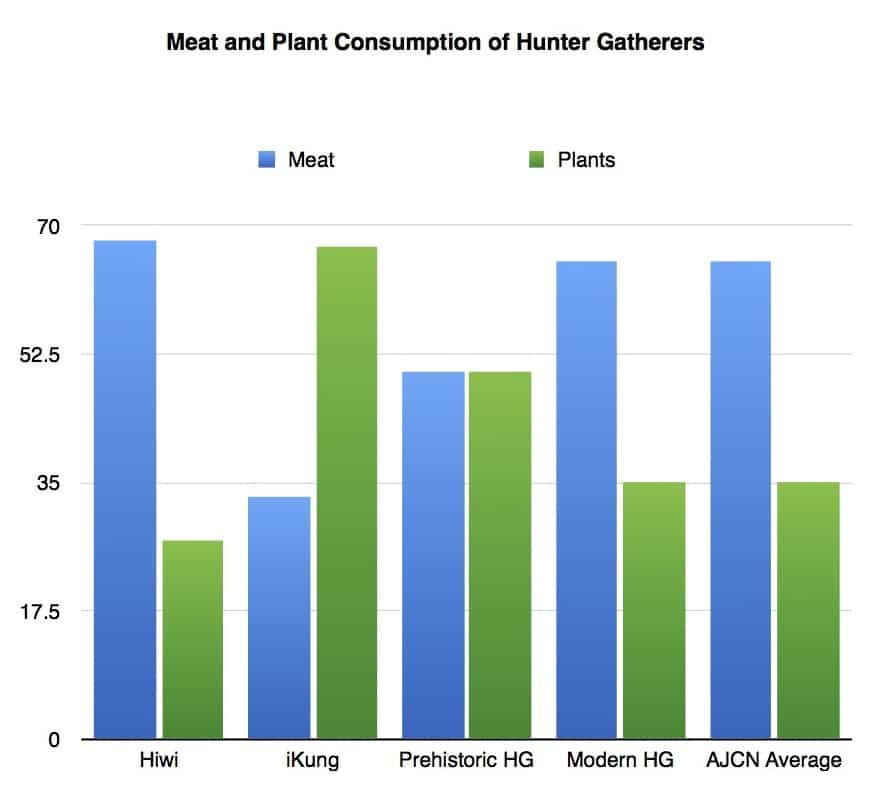
Information on hunter-gatherer societies is more difficult to obtain to find accurate day to day dietary habits. The ethnographic record of hunter-gatherers includes hundreds of cultures, but only about 50 groups have been studied. From the Ethnographic Atlas used by Dr. Cordain, he suggests prehistoric hunter-gatherer groups, allowing for regional variation, generally received around 50% of their nutrition from wild game and fish, while modern hunter-gatherer societies obtain 56-65% of their nutritional intake from fish and hunted game.

This study from the American Journal of Clinical Nutrition estimates hunter-gatherer animal food sources constituting between 45-65% of their total energy intake. Most hunting societies typically used the whole carcass which included organ meats, fat (high caloric energy), and bone marrow.

This study shows a cross-cultural examination of longevity among hunter-gathers and gives us insight on this topic. For example, the Ache were full-time, mobile tropical forest hunter-gatherers until the 1970s.

The Hiwi are neotropical savanna foragers of Venezuela. At the time of the study, almost their entire diet was wild foods, with 68 percent of calories coming from meat and 27 percent from roots, fruits, and an arboreal legume (5 percent as agricultural fruits, squash and store bought goods). The !Kung are estimated to contribute 33% from animal foods and 67% from plant foods, with fifty percent (by weight) of their plant-based diet coming from the mongongo nut, which is available throughout the year in massive quantities.

The Gainj are forager horticulturalists with a diet consisting of sweet potatoes, yams, and taro in the central highland forests of northern Papua New Guinea where meat is fairly rare. Typically, those closer to the equator consume more plants and less protein while those at higher latitudes, consume fewer plants and more animals. In other words, availability is what determines the percentage of animal and plant foods, much like in agricultural societies.

To see how important that the meat and fish supply was high, we can look at the innovate strategies our later ancestors employed for more successful hunts.

We see the earliest evidence of stone, bone, and iron being used for arrow making, bows and axes, poison on the tips of arrows for taking down large game – and therefore more meat. Large nets and harpoons for fishing were used by both men and women for catching seafood. There is evidence of the deliberate use of fire to encourage new growth for animals to eat, and the cleaver and other processing tools for butchering large amounts of meat.

This study also mentions that before effective hunting, males could have relied on honey and plant foods. But if you read on page 65, we are shown that there were wooden spears next to horse bones dated 400,000 years. Stone tools and cut marks on bones dating back more than 2 million years are also evidence that animal carcasses were butchered at the beginning of the genus homo. Well, that’s interesting. We were meat-eaters from at exactly the start of the genus homo, and the modern human.

How Long Did Hunter-Gatherer’s Live?

How long did hunter-gatherers live? Past research will have you believe that they had short lives, and rarely made it past 40 and therefore the modern diseases didn’t show up due to age. It turns out, modern research has found conflicting results. The average ages of hunter-gatherers have always been grossly misrepresented due to infant mortality, skewing the numbers to appear much lower than they are.

The average modal age of adult death for hunter-gatherers according to the previously mentioned study is 72 with a range of 68–78 years. Illnesses account for 70 percent, violence and accidents for 20 percent, and degenerative diseases for 9 percent of all deaths in our sample. Illnesses largely include infectious and gastrointestinal disease, although less than half of all deaths in the sample are from a contact-related disease. Heart attacks and strokes appear rare and do not account for these old-age deaths which tend to occur when sleeping.

Few risk factors for cardiovascular disease exist among active members of small-scale societies. Obesity is rare, hypertension is low, cholesterol and triglyceride levels are low, and maximal oxygen uptake is high.

Overall, degenerative disease accounts for 6–24 percent. There are also no studies or mention of Alzheimer’s, Parkinson’s, or other forms of dementia. This would line up with modern diseases stemming from sedentary lifestyles, processed foods, vegetable oils, sugar and chemical exposure and ingestion; not meat.

Continue to How Much Meat, Plants and Dairy Did Agricultural Societies Consume?

Lower Back Twinge: What Should I Do?

Lower Back Twinge: What Should I Do?

I recently had the unfortunate incident of injuring my back during yoga. This class was much more intense than usual, and there was some twists and turns that I should have opted out for. The stretch that was finally too much, was actually sitting with my legs straight out, and stretching the opposite arm to the opposite leg. It was at this moment that I experienced the sharp, lower back twinge that sends panic to your brain. I immediately stopped and realized that this was not good. After class I went to put on my shoes, and there it was again except even more intense. I knew the next few hours were going to get progressively worse.

A lower back twinge usually happens during a simple movement that uses an angle that your lower back does not agree with. It can be as simple as picking up a grocery bag, a baby or picking up something you dropped. But a lot of these injuries occur during squats and deadlifts due to poor form.

The first thing that came to my mind was I use to deadlift 400lbs without any injuries, and I pull a muscle in my back stretching. Fantastic.

4 Hours Later: All Aboard The Lower Back Twinge Pain Train

Later in the evening, I’m walking around like a stiff grandpa and using the grandma style squat technique to pull things out of the refrigerator. Drop something on the floor? You have to go into a lunge. Take off your shoes? You have to lie on the bed and put your feet in the air like a baby.

The pain was bad and I was seriously limited in my movements. If you injure your arm, shoulder, hamstring or ankle, at least you can workout other parts of your body and pretty much get around it. But your back is the center of every movement you do. Whether you work in an office our outside, a back injury affects everything. So I was not going to take this lying down so to speak.

If you need to get back to work -physically and at your office – and want to accelerate the healing process, here is the best way to accelerate the healing process for a lower back twinge.

Conventional Wisdom for the Lower Back Twinge

Conventional “wisdom” says to use Motrin or other pain killers and ice. Only half of that wisdom is correct. Ice is crucial, especially in the beginning. While NSAID’s may be necessary for acute pain in the early stages, you can relieve the pain and accelerate the healing process while still having the feedback mechanism is place that tells you not to move in a certain way for other circumstances.

Lower Back Twinge Program

ICE + NATURAL ANTI-INFLAMMATORIES + HEALING AGENTS + REST = BACK TO BUSINESS

If you are serious about not missing workouts or work due to this injury, it will be well worth your time to follow this program.

Ice: Ice it 4 times a day for 20 minutes.

1. Full Spectrum CBD

You will likely need to find a cannabis shop to get the right CBD product. A full spectrum CBD product is night and day when it comes to pain relief.  My mom has chronic back pain, and this is the only thing that worked. The 100% CBD tincure is best for pain, and the 1:1 CBD to THC tincture is best for sleep.

2. Magnesium Malate 

Magnesium is what relaxing, while calcium is contracting. Magnesium provides tremendous relief from muscle spasms and pain because it helps it let go. In fact, spasms can occur from a magnesium deficiency in the first place. Magnesium is needed for 300 biochemical reactions that maintain muscle and nerve function, and both magnesium and malic acid have been found to provide support to individuals with muscle tenderness and fatigue.

A study of 24 individuals found malic acid along with 300 mg magnesium taken two times daily provided significant support in measurements of tenderness and discomfort.

3. Nordic Naturals Ultimate Omega

Omega-3 fatty acids are one of the most well-studied and effective anti-inflammatories. A 2006 human study results found that omega-3 fatty acids (between 1200-2400 mg daily) mirror other controlled studies that compared ibuprofen and omega-3 EFAs demonstrated equivalent effect in reducing arthritic pain.

From the same study “omega-3 EFA fish oil supplements appear to be a safer alternative to NSAIDs for treatment of nonsurgical neck or back pain in this selective group.” Fish oil should not be used at the same time as aspirin and blood thinking medications.

4. C-Salts Buffered Vitamin C

According to this study, “it is clear that vitamin C has a major role to play in mitigating pain in a number of clinical conditions,” especially when combined with beta-carotene and methionine. Vitamin C is necessary for the correct synthesis of collagen, and it helps to maintain healthy collagen.

Collagen is the glue that holds your body together, and without healthy collagen, you will begin to fall apart. Vitamin C strengthens the tendons through collagen synthesis and has been found to accelerate the healing process of the Achilles tendon, which you can read about in the article Is Vitamin C the Most Important Vitamin For You? This will also help you determine your dosage.


Results and Other Notes after 1 Year

While I had a few incidences when it started to bother me (mainly if lifting heavy weights) there were a few things that made the biggest difference.

Get a lacrosse ball instead of a foam roller. Using this on the glutes helped keep my back much looser and made the biggest difference with releasing knots.

I also learned how important it was to pay special attention to keeping my hips, lats, and hamstrings loose with post-workout stretching, and making sure the core as a whole gets worked, especially a hyperextension bench. Overworking the abs with pulling and crunching motions appears to also lead to potential issues.

The Healthy Way to Barbecue

The Healthy Way to Barbecue

If You’re Gonna BBQ, Do it Right

I think we can all agree that everything tastes better when it’s cooked on the barbecue. The flavors are more intense, the juices sealed, and that smoky flavor is hard to beat. While spending some time with friends in Colorado, I was blown away with the flavor of the chicken that was cooked on the barbecue. I finally have one now, and I am now too aware that chicken I cook in the oven is inferior to BBQ chicken.

You have to wonder if a bunch of guys standing around the barbecue while flipping some meat with a drink in hand hasn’t changed at all for hundreds of thousands of years. Cooking meat over a flame isn’t a new concept. So why is there so much concern over barbecuing? Is barbecuing healthy?

Perhaps you have heard reports that there are health risks associated with barbecuing meat. When you barbecue, carcinogenic compounds called polycyclic aromatic hydrocarbons are created when the fat drips on the fire, causing a smoky flame. Another toxic compound called heterocyclic amines are created by high heat reacting with the proteins.

According to the National Cancer Institute, exposure to high levels of HCAs and PAHs can cause cancer in animals; however, whether such exposure causes cancer in humans is unclear (makes sense since animals do not cook their food).

This is because HCAs and PAHs become capable of damaging DNA only after they are metabolized by specific enzymes in the body, a process called “bioactivation.” The problem is that each individual has a unique metabolism and enzyme bank that may skew the cancer risks associated with exposure to these compounds as outlined in Nutrition Genome Reports.

High heat also increases the formation of advanced glycogen end products (AGE’s), which build up in the body over time and increase oxidative stress and inflammation. While I still think there is something missing since we have been cooking meat and fish over a flame for a long time, these compounds appear to be a problem and there are ways to reduce your risk.

Top Ways to Reduce Heterocyclic Amines and Polycyclic Aromatic Hydrocarbons in Meat and Fish for Healthy Barbecuing 

1. Olive oil, yogurt, wine, beer or fruit marinades with garlic, onion, lemon, herbs and spices 

Marinades can reduce the risk of HCA’s up to 90 percent! High antioxidant fruits, lemon juice, herbs and spices help keep meat fresh and juicy, while protecting against HCAs and reducing AGE’s. Make homemade marinades with garlic and spices like rosemary, turmeric, cinnamon, cardamom, ginger, basil and oregano. Olive oil based marinades work great for beef, lamb, pork, chicken and fish, yogurt marinades work best for chicken and lamb, and fruit marinades work best for chicken and fish.

A 2006 paper testing a red wine marinade on HCA formation in fried chicken breasts reported a reduction in one particular HCA by 88%. Garlic added directly to hamburger patties has been found to lower HCA production by more than 60-70% in two studies. 

Avoid commercial tomato and sugar-based barbecue sauces that have been found to actually double and triple chemical formation.

2. Choose grass-fed meat, a gas grill and cook medium to rare

Avoid conventional meat that could have residues of pesticides, creating other dangerous compounds at high heat. Grass-fed meat is higher in vitamin E, and in a study adding concentrations of vitamin E to the surface of ground beef reduced HCA production by 70%.

Charcoal grilling promotes the highest levels of PAH’s, so choose a gas grill. Aim for medium to medium rare for red meat, flip often and avoid burning. The darker the color the higher the HCA concentrations.

3. Food and drink pairing 

What you drink and eat with your steak can also make a big difference in the reduction of carcinogenic compounds. For example, the phytonutrients in Brussels sprouts protect against carcinogenic compounds during barbecuing, which in particular are tied to the proliferation to colon cancer cells.

In a study from Carcinogenesis, animals given Brussels sprout juice and heterocyclic amine carcinogen had a reduction in pre-cancerous cells in the colon by up to 52%. Green tea, black tea, rooibos tea, red wine, blueberries, blackberries, red grapes, kiwi, watermelon, parsley, and spinach all inhibit the mutagenic activity of certain HCAs in vitro.

Sulforphane present in cruciferous vegetables has also been shown to have antimutagenic effects against HCAs, with broccoli sprouts containing some of the highest amounts of sulforaphane.

The good bacteria in fermented vegetables and dairy help reduce the effect, and guess what? That bottle of beer or glass of wine while you grill is also neutralizing the effect of the harmful compounds thanks to the yeast. Don’t forget Kombucha which contains green tea, black tea, yeast and probiotics, to supercharge your protection.

4. Fermented Chlorella

If you do a lot of barbecuing, consider taking chlorella. Chlorella is a chlorophyll-rich micro algae with strong detoxification qualities by binding to heavy metals, chemicals and pesticides.

In one study, chlorella was found to protect against one of the most abundant heterocyclic amines found in meat or fish cooked at high temperatures. One Russian trial using broken cell wall chlorella and cilantro actually eliminated all heavy metals including mercury.

Chlorella is more popular than vitamin C in Japan for immunity and is an important supplement if you consume a lot of fish. Quality control is very crucial which is why I chose this particular one that I have used myself.

5. Himalayan Salt Block

I received this as a gift, and I have to say that this must be a well kept secret for chefs because meat and fish taste amazing on it. You don’t need to salt anything, just add what you want to grill with your marinade and place it on the BBQ.

The benefit of the Himalayan Salt Block is that for most cuts of meat or fish, the fat stays on the block and doesn’t hit the flame. Plus the heat is better distributed evenly through the block without sacrificing grilling flavor. Winning combo.

Sources

1. http://naturalmedicinejournal.com/article_content.asp?article=88

2. http://www.cfs.gov.hk/english/programme/programme_rafs/files/ra_pah.pdf

3. http://www.cancer.gov/cancertopics/factsheet/Risk/cooked-meats

The Health Beat Diet

The Health Beat Diet

What is the Health Beat Diet?

There was a time period during the short Mesolithic bridge between the late Paleolithic period and the beginning of the agricultural Neolithic age. The diet was one of a hunter-gatherer with the beginning of plant and animal domestication.

The Health Beat diet transforms the power and speed of a hunter, with the brute strength and endurance of a farmer into the modern athlete. The diet is designed with roughly a 50/50 animal to plant ratio with the principles of the hunter-gatherer, the addition of early agricultural foods and fermentation, and the modern processing machinery and natural preservation techniques of the present. The most accurate way to figure out the optimal macro and micronutrient composition of your diet is through nutrigenomic testing.

Cultures from around the world have perfected meals over thousands of years, and only recently have we lost these traditions. You will find that each culture has different combinations of foods, but often share the same principles: local and fresh plants, some raw, some cooked, some fermented, bone broths, animal foods including organ meats and seafood.

By tapping into your local food supply and following traditional dietary principles, you are obtaining the highest nutrient density of your food and the most favorable genetic expression of your DNA. Today we can also take advantage of modern preservation methods of adaptogenic herbs and mushrooms that are now available from every corner of the world to help adapt to a more stressful (emotionally, psychologically and environmentally) society.

What is the Philosophy behind The Health Beat Diet?

The Paleo diet is based on the pre-agricultural, hunter-gatherer model of eating. The idea is that since grains and dairy did not enter the diet until roughly 10,000 years ago, the body has not adjusted to consuming these foods and functions optimally without them.

Interesting enough, gluten in grains and casein in milk are two of the most allergenic foods. The principles of the Paleo diet are sound: wild fish, grass-fed meat, vegetables, fruit, nuts, and seeds with a focus on protein, fat, and carbohydrates in proportion to your activity level.

However, without agriculture, most of the foods we consume now would not exist. It was through selective breeding that we have the animals and plants we have today. We also would not have oil presses needed to make olive oil and coconut oil, food-based supplements, ergogenic aids, that glass of “Paleo-friendly” wine or a shot of tequila, the modern advances of grass-fed whey protein powder, or the adaptogens encapsulated from around the world. Therefore the modern Paleo diet isn’t really accurate; it’s a hybrid.

Why We Should Learn from our Neolithic Mistakes

According to the book Neolithic by Susan Foster McCarter: Like most people, you may have always assumed that hunter-gatherers were usually hungry, tired and sick; and that things were much better once people began producing their food and living in permanent villages. In fact, the opposite is true: hunter-gatherers were extremely healthy and Neolithic farmers were not. Paleopathologists tell us that foragers had excellent teeth, they were rarely malnourished, they were taller than most people today, and they didn’t suffer from endemic or epidemic diseases. 

We know this because the evidence is in the skeletal remains. The skeletons are early Neolithic farmers show scurvy (vitamin C deficiencies), rickets (vitamin D deficiencies), poor dental health, bone infections and a stature roughly 6 inches shorter than the hunter-gatherers. So despite an abundance of food, people were often hungry and malnourished. Why? Because the diet shifted to a grain-based diet of porridge and unleavened bread. Is a diet high in porridge, unleavened bagels, pasta and improperly prepared whole-grain dishes the best approach for the modern athlete or sedentary individual?

What also happened during this time was that diseases became rampant as we moved into close quarters with each other and other animals. Rodents, flies, lice, fleas, hookworms, intestinal parasites and mosquitos transmitted disease in these new breeding grounds, and work moved to the indoors away from the sunlight which was a natural disinfectant. McCarter “Dogs gave villagers rabies and possibly measles, cats gave them toxoplasmosis, they caught the common cold from horses, influenza from pigs or chickens, tetanus from pigs, horses, cattle and dogs and diphtheria, tuberculosis and measles all came from cattle.” 

Dairy and Grains: Not so black and white

It could also be argued that certain types of dairy and grains – especially fermented – have allowed cultures to thrive and demonstrate superior health once indigenous people learned the importance of preparation and combination. Weston A. Price demonstrated this in Nutrition and Physical Degeneration.

The high mountain Swiss with raw cow dairy, sourdough rye, and weekly bone broth, and the Gaelic of the Outer Hebrides with their steady diet of cod, lobster, crab, oysters, and fermented oatmeal both proved to balance their diet with agricultural foods without sacrificing their health. Dr. Price found evidence of perfectly straight and cavity-free teeth in these cultures, along with the absence of disease.

The Eastern Europeans use fermented dairy and dark sourdough rye and have been able to thrive in the harsh climate with the aid of agricultural crops, and have produced some of the hardiest people in history.

Our modern civilization has become a hybrid culture of cities that deliver food from farms all over the world. We still live in close proximity to each other with animals and not only have to deal with bacteria and viruses of the past but the new diseases of the future like cancer, heart disease, diabetes, auto-immune disorders, and allergies.

Today we have thousands of chemicals that our bodies are not designed for and are struggling to detoxify. We have food that is not only grown in nutrient-poor soil but often shipped halfway around the world, stored for weeks and improperly cooked; leaving only traces of its original nutritional content. This has is created the need for a new model utilizing supplementation of herbs, mushrooms, and minerals to prevent deficiency and toxicity.

The Health Beat Diet Principles

We highly recommend nutrigenomic testing to customize this list the best way for you.

1. Animal protein

Wild fish (salmon, cod, herring, sardines, mackerel, anchovies, arctic char, shrimp, squid, oysters, crab, low-mercury tuna), wild meat (elk, boar, buffalo and venison), grass-fed (not grain-fed) domesticated meat (beef, lamb, chicken, duck, goat), organic pastured liver, heart, kidneys and pastured eggs.

2. Vegetables, Fungi (especially wild!), herbs and spices

All vegetables, mushrooms, herbs, and spices are excellent. Consume garlic, onions, leeks, broccoli, cabbage (esp. sauerkraut), Brussels sprouts, kale, cauliflower, turmeric, ginger, cloves, cinnamon, oregano, rosemary, parsley, basil, cardamom, shiitake and maitake mushrooms all for anti-cancer compounds.

Choose organic sweet potatoes, taro root, squash, peas and carrots for glycogen storage for heavy training. Choose more raw, watery vegetables during the warmer months, and cooked vegetables during the colder months. Add fermented vegetables with meat and sea vegetables like bladderwrack, wakame, nori, kombu and dulse with fish or other meals for iodine.

Here at The Health Beat, we are huge proponents of all types of mushrooms all around the world.

3. Fruit

Choose organic and wild berries (blueberries, raspberries, blackberries, elderberries, strawberries, cranberries etc.) for anti-cancer compounds, vitamin C and various other nutrients. Choose low glycemic and fiber-rich fruit like apples and pears (best for women), and electrolyte-rich watery fruits for exercise like oranges, tangerines, lemons, limes, grapefruit, berries, mango, watermelon, cantaloupe, pineapple, apples, peaches, and apricots. If you are trying to keep your sugar intake low, stick with berries only. Eat what is in season as each one provides different compounds for the weather to help you adapt.

4. Nuts, seeds, and oils

All raw nut and seeds are recommended to be prepared by soaking/sprouting and dehydrating. Extra virgin coconut oil, pastured lard, pastured tallow, pastured duck fat and ghee are the only cooking oils recommended. Use cold-pressed, unfiltered olive oil for salads and very low heat.  No canola, grapeseed, sunflower, safflower, soy or corn oil.

5. Grains and legumes

The Neolithic founder crops were emmer wheat, einkorn wheat, barley, lentils, peas, chickpeas, bitter vetch and flax. There is also evidence of domesticated rye in the Natufian culture of the Eastern Mediterranean and in northern Europe. It has been suggested that wild einkorn grain was harvested in the late Paleolithic and early Mesolithic Ages, 16,000-15,000 BC.

Today, the majority of wheat today no longer resembles the wheat of our ancestors. I recommend choosing slow-rise sourdough if you are going to have bread. The ingredients should only include flour, sourdough starter, water, and sea salt. If it says “yeast” and contains hard to pronounce preservatives, it’s not real sourdough. Fermentation helps break down gluten, FODMAPs, and mineral blocking phytic acid.

One study published in 2007 in the peer-reviewed Applied and Environmental Microbiology found that when wheat bread was thoroughly fermented, it reduced gluten levels from roughly 75,000 parts per million to 12—a level that technically qualifies as gluten-free. Sourdough rye is the traditional bread of cold climates like Scandinavia, Switzerland, and Russia.

Choose oats and rice carefully. Rice has had issues with heavy metal contamination and toxins have been found to be high on oats.

Lentils provide an inexpensive source of protein and fiber when prepared correctly (higher fiber benefits women’s estrogen levels but not men’s testosterone), chickpeas are made into hummus and freshly ground flax can be added to a meal for extra fiber. Most beans (chickpeas are an exception) are avoided due to the digestive strain it causes many people due to improper soaking and cooking techniques. You can, of course, choose to avoid this category altogether and you will not be deficient in any vitamins or minerals.

6. Dairy – Grass-fed, raw, fermented and whole fat only

Goats and sheep were among the first domesticated animals by the Neolithic farmers around 10,000 to 11,000 years ago, while cows were speculated to be domesticated about 7,000 to 8,000 years ago.

One theory of the pervasive intolerance of cow dairy in the western world is believed to be caused by the breeding of A1 cows instead of A2 cows. A1 milk contains the amino acid histidine whereas A2 milk contains proline at the same position of the amino acid structure. Scientists believe a gene mutation is thought to have occurred around the time of domestication in different parts of Europe, whereas the mutation does not appear to have taken place in African and Asian domestication.

Another theory is that pasteurization is to blame and that people who cannot tolerate pasteurized dairy can consume raw dairy without a problem.  People do often tolerate goat and sheep’s milk without any problem and is recommended if there is any sensitivity. Grass-fed whey protein powder and butter from cows is often tolerated by those with a sensitivity, however, goat versions of both can be purchased.

These are the top-recommended cheeses due to their high vitamin K2 content, important for getting calcium into the bones instead of the arteries, healthy teeth and gums, and more. *Due to chemical contamination in the fat content in animals – especially milk – I do not recommend buying any commercial dairy products. Small, isolated farms with grass-fed dairy would be the best choice, otherwise, skip it. 

7. No refined sugar, artificial sugar, artificial colors or words you cannot pronounce

Eat food from the land, not from the laboratory.

8. Fermented drinks and tea

Kombucha, water kefir, Kvass, dark roast organic coffee and other fermented drinks are recommended for immunity, cognition, and recovery. Organic black tea, green tea, and Yerba Mate are all excellent coffee substitutes for numerous health benefits.

9. Adaptogens

Utilize the advantage of being able to obtain mushroom (reishi, maitake, cordyceps, and Coriolus) and herbal adaptogens (ashwagandha, Rhodiola and eleuthero root) to increase resistance to biological, chemical and physical stress, along with power, speed, endurance and immunity from around the world.

10. Supplementation

Include high-quality food-based supplements in your diet as needed. Check out our Best and Worst Multivitamins article.